Several months back, in a forum discussion, the present author came across something quite interesting on the website of the owner of the said forum—going by the name of F. W. Sweet, and this is what it says/said:
"It seems that Dr. Shriver’s maternal grandfather moved from Pennsylvania to Iowa, then to California, leaving behind in the process most of his ties with his relatives.23 Dr. Shriver, it turns out, (see photograph above) is one of the 74 million White Americans with significant recent African genetic admixture.
In a coincidentally similar fashion, Dr. Rick Kittles, Shriver’s collaborator from Howard University in Washington, discovered that he carries the FY-null genetic marker at genome position 16q24.3. This marker is found in 998 out of every thousand Europeans but found in only one out of thousand Africans. Many of Dr. Kittles’s other ancestry-informative markers tell the same unexpected story. Dr. Kittles (see photograph above) is one of the many Black Americans with strong European genetic admixture. And yet, and there is no other way to say this, Dr. Shriver “looks White” and Dr. Kittles definitely “looks Black.” Why is there such a discrepancy between measured genetic admixture and physical appearance?" - by F. W. Sweet
At the time, this is what the present author posted in response to the extract:
Yes, I’ve seen both Dr. Shriver’s and Dr. Kittle's appearance, and I must say, it is hard to believe that either have low European or African recent ancestry respectively. If indeed the labeled sample belonged to either party, assuming that the said alternative coincidences did not arise from any probable technicality in the labeling, then I can only come to the conclusion that, the DNA sites examined as such, were made possible because those sites were kept intact in either one of their immediate parents, and if Shriver’s mum’s reaction is any indicator to go by, upon hearing the news, these markers would have been kept intact in her “white-appearing” father. Speaking of father, according to Mr. Shriver, how did he reach the conclusion that it had to be from his mother’s dad’s side, and not necessarily from his mother’s maternal side? Also, could it not have come from his father's side, and if not, why? Were many of the said ‘markers’ deemed to have been sex-biased in their genetic transmission?
I had the result for two or three years before I even looked up the ID number of the person whom we tested. I looked at who it was and it was me! I checked myself and the rest of my relatives and tracked it through my family. I never considered that there were any African people in my family. There’s no real variation in my family. The admixture must have been pretty far back. It just so happens that we can detect it with the markers we have. My mom especially stood out as being surprised, maybe because I told her it was coming through her father. She still doesn’t believe it about her family! The part of Pennsylvania where my mother’s father came from is where the Underground Railroad ended. There are several towns right here in Southern Pennsylvania where there are very light-skinned African-American communities that are the remnants of the Underground Railroad. - by Shriver
So, not only would those markers have to be deemed “invisible” in terms of their impression on phenotype, but they would have had to remain intact to account for their genetic integrity throughout the parent-to-offspring transmissions for at least a few generations. For Dr. Kittles to retain that level of melanin, it occurs to me that he’d had to have been a product of a union between parents from families that had maintained endogamy for at least a few recent generations, likely of families that have had long enough tradition of socially identifying with the “black“ or “colored” community. I suspect, since I cannot say for certain without independent corroboration, that either of these two researchers would likely indirectly clue us in on this possibility through either paternal and/or maternal DNA markers, which by normal account, correspond to Y-chromosome markers and mtDNA respectively. Either that, or else more “AIM” would have been needed to be identified to account, if not *indirectly*, for the genetic component counterparts of their ancestors who were responsible for transmission of their phenotypic appearance - as is the case with skin color and hair texture for example. I realize these traits have their own markers, but I'm referring to the broader hereditary component of the parties who were primarily responsible for transmitting those traits. It is hard to imagine that only those 'visible' markers of those ancestors withstood the test of time, while every other component of their genetic transmission was swamped through the generations, particularly for 'immediate' family households who would swear that the maternal and paternal lines of the said family come predominantly from one ethnic endogamous group [be it "white" or "black"].
With regards to piece about Kittle’s ancestry, this was said:
In a coincidentally similar fashion, Dr. Rick Kittles, Shriver’s collaborator from Howard University in Washington, discovered that he carries the FY-null genetic marker at genome position 16q24.3. This marker is found in 998 out of every thousand Europeans but found in only one out of thousand Africans. - by F.W. Sweet
But in the tables provided, this location should have been associated with MC1R-314*, and not the FY-null marker, which is supposed to have been located at 1q23.2. Was this a typo, or something else is at work here?
And indeed, that was a typo, as the author himself admitted, upon my issuing of the notification above. If indeed the typo was in wrongly naming the loci, which it appears it is/was, then MC1R-314*'s — an allele known to prevalent in folks of recent African ancestry — location in Mr. Kittles' sample should come as no surprise.
Short of some extraordinarily rare situation of these two geneticists — aka Shriver and Kittles — being products of union between a) a parent heterozygous at certain loci linked to outward phenotype traits like skin color, eye color, hair thickness et al., which are generally observed predominantly in one geography than another or in one ethnic group than another, and a parent largely homozygous across said loci, b)OR else, between parents who happen to both be heterozygous at some or the other section of said loci, wherein the offspring [in this case, either Shriver or Kittles] somehow wound up being largely homozygous across said loci, from the look of things, there are very strong indications here that what Shriver was actually looking at as his own, might well have been Rick Kittles' DNA sample, and likewise, Shriver's DNA sample was mistaken for Kittles'. There might have been a technicality at the lab [could be labeling mishap for example, though some other yet-to-be-determined factor(s) could have been the cause] , which somehow escaped both Shriver's and Kittles' attention, and so, they took it for granted, no matter how awkward the results turned out to be, as their own, respectively. This would explain the seemingly reverse results for each candidate, who coincidentally, were partners on research work. Short of specific independent corroboration, obviously this amounts to conjecture on my end; let's just say that I'm throwing out there, a possible scenario for what could have accounted for the results we are told about, aside from considering one of those rare genealogical situations. One thing most of us would agree on, is that those results are certainly interesting!
______________________________________________________________________________
*Further reading:
— Skin pigmentation gene alleles
— Skin pigmentation gene alleles — Part 2
Friday, October 10, 2008

Tuesday, October 7, 2008
Do Ancient Nile Valley Hairdos remind you of anything seen today?
What is the point of learning our history? Well, for one, it is the ability to relate to our ancestors, and perhaps learn from their experiences along the way. Since our historic ancestors—as opposed to distant prehistoric hominid forebearers—were obviously human like ourselves, we can psychologically and emotionally relate to many of the underlying subjective and objective forces of the accounts they left us; this includes colorful artistic displays of social life dating back to antiquity. This is most certainly the case with the ancient Nile Valley complexes. On a lighthearted note, let's take hairdos for example, and allow the visual aids do the talking...
 Cranial remains [unspecified date, but guessing by some references to the burial site in that same area, it is perhaps dated to ca. A.D. 550-1450] of what appears to be a young female located Kulubnarti, Sudan, with its apparently well preserved braided hair locks. Braided hair locks is not an uncommon sight across continental Africa and the African diaspora even to this day.

More braided locks/extensions...


Long braided hair locks of the types exemplified above are not the only the hairdos that invoke reminders of contemporary examples; the famous 'youth side-lock' [below: an artistic rendition of a young Rameses] too, can be located today...


Lest there are any assumptions that in the ancient Egyptian society, the 'side-lock of youth' was reserved for the royalty, one might want to give it a second thought, for we are told...
"As children grew, they apparently had carefree periods in their lives. There have been many toys and games found in excavations, and paintings showing children playing together. The children wrestled, raced, played tug of war, used small doll-like figures of animals, boats, balls, and danced, just like children do today. They had birds or dogs for pets. Very young children often went naked, or with girdles around their waists. Their hair was worn in a braided plait, with the end rolled up in a curl, the familiar "sidelock" of youth." - Marie Parsons, Childbirth and Children in Ancient Egypt
Why stop there; how about "fuzzy" dos?...the Beja warriors (compared below, with the figures on the stone carvings) were not mocked by intruding British adversaries as "Fuzzy Wuzzies" for nothing:
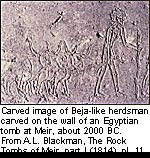

And then, well...the plain ol' Afro, as that sported by this ancient Egyptian male...

And so, the list of different examples may well go on and on...

Here is yet another example of a mummified specimen, but this one is identified with a name and more specifically dated, placed side by side with contemporary examples of braided hair locks/extensions...


More braided locks/extensions...


Long braided hair locks of the types exemplified above are not the only the hairdos that invoke reminders of contemporary examples; the famous 'youth side-lock' [below: an artistic rendition of a young Rameses] too, can be located today...


Lest there are any assumptions that in the ancient Egyptian society, the 'side-lock of youth' was reserved for the royalty, one might want to give it a second thought, for we are told...
"As children grew, they apparently had carefree periods in their lives. There have been many toys and games found in excavations, and paintings showing children playing together. The children wrestled, raced, played tug of war, used small doll-like figures of animals, boats, balls, and danced, just like children do today. They had birds or dogs for pets. Very young children often went naked, or with girdles around their waists. Their hair was worn in a braided plait, with the end rolled up in a curl, the familiar "sidelock" of youth." - Marie Parsons, Childbirth and Children in Ancient Egypt
Why stop there; how about "fuzzy" dos?...the Beja warriors (compared below, with the figures on the stone carvings) were not mocked by intruding British adversaries as "Fuzzy Wuzzies" for nothing:


And then, well...the plain ol' Afro, as that sported by this ancient Egyptian male...

And so, the list of different examples may well go on and on...
Tuesday, September 30, 2008
Lactose Tolerance Phenotypes in Africa
NY Times [italicized extract below] — On the findings that Sarah Tishkoff and her team found, as have others too, showing that the C−13.9kbT allele which is determined to be a predictor of lactose tolerance in Europe, has not been effective in predicting lactose tolerance in Africa, even though this is a continent where lactose tolerance amongst various groups, particularly those that practice pastoralism, has been well documented. The reason for this phenomenon is 'convergent evolution', wherein several distinct alleles different from the European examples appear to be promoters of lactose tolerance...
Geneticists wondered if the lactose tolerance mutation **in Europeans**, identified in 2002, had arisen among pastoral peoples elsewhere.
But it seemed to be largely absent from Africa, even though pastoral peoples there generally have some degree of tolerance...
After testing for lactose tolerance and genetic makeup among 43 ethnic groups in East Africa, she and her colleagues have found three **new** mutations **all independent of one another** and **of the European mutation**, that keep the lactase gene permanently switched on.
Meanwhile, what needs to be understood when considering lactose tolerance situations in Africa, courtesy Mulcare et al. 2004…
—1) Lactase persistence varies widely in frequency among different human populations, both between and within continents.
Examples of within continents variations...
*E.g. 1 - in Europe itself variation is apparent - Almost all Dutch people and 99 percent of Swedes are lactose tolerant, but the mutation becomes **progressively** less common in Europeans who live at increasing distances from the ancient Funnel Beaker region - NY Times, an article on Sarah Tishkoff's 2004 findings on lactase phenotypes in African samples.
*E.g. 2 - Southern Europeans generally showed lower lactose tolerance phenotypes than regions to their north.
*E.g 3 - After testing for lactose tolerance and genetic makeup among 43 ethnic groups in East Africa, she and her colleagues have found three **new** mutations **all independent of one another
Example of between continents variation:
*E.g. - After testing for lactose tolerance and genetic makeup among 43 ethnic groups in East Africa, she and her colleagues have found three **new** mutations **all independent of one another** and **of the European mutation**, that keep the lactase gene permanently switched on.
—2) To date [as of 2003], there have been no reports of allele frequencies for the C−13.9kbT polymorphism in populations living in Africa.
[as of 2004] The frequency of −13.9kb*T type was low or zero in most of the African groups tested. In relation to this, we have the following examples:
*E.g. 1 - In the African populations, the −13.9kb*T allele was only found in a few individuals; all but one of these individuals were from Cameroon, [and these were in the main, ancestral or paraphyletic R1*-M173 carriers]
*E.g. 2 - It is noteworthy that −13.9kb*T was not found in East Africa at all, even though the data sets included many known pastoralists and groups with a high frequency of lactase persistence.
—3) Previous studies of African populations showed variation in the frequency of lactase persistence among population groups, as well as a complex pattern of distribution (reviewed in Flatz 1987; Holden and Mace 1997; Swallow and Hollox 2000).
African populations display multiple lifestyles, with milk-drinking and non–milk-drinking groups often living in close proximity, and have complex demographic histories. Some examples below:
* E.g. 1 - Pastoralists, such as the Fulbe in Nigeria, typically have higher frequencies of lactase persistence than nonpastoralists in the same country—for example, the Yoruba and Igbo
* E.g. 2 - The lactase-persistence phenotype is usually observed at low frequencies in Bantu- and Khoisan-speaking groups (<20%); Comparisons of the predicted frequencies of lactase persistence, deduced from the frequency of −13.9kb*TT and −13.9kb*CT genotypes, with the reported frequencies obtained from lactose-tolerance testing, showed these were significantly different in all of the African populations except the Fulbe and the Hausa.
—4) Why it is misleading to use reports for African American candidates as representative of lactose tolerance phenotypes amongst Africans:
*Although the −13.9kb*T allele frequency in Americans with African ancestry is consistent with their lactase-persistence frequency (Enattah et al. 2002), there is known to be substantial admixture between African Americans and European Americans (Parra et al. 1998)
So, African American examples of the C-13.9kbT alleles could represent introgression from European Americans, since as already noted above, at the time of Mulcare et al.’s study, “To date, there have been no reports of allele frequencies for the C−13.9kbT polymorphism in populations living in Africa” and Mulcare et al. themselves found that “the frequency of −13.9kb*T is too low to explain the observed frequency of lactase persistence.”
*In relation to point 3 at the top - Though African American gene pool are largely reflective of those of their ancestral African populations, it doesn’t represent the overall gene pool of Africa, and it may well have been subjected to some micro-evolutionary processes, however low, since the time of separation from source African populations, including — as noted above — bidirectional genetic introgression with populations that are otherwise rarely geographically proximate to African populations.
*African American lifestyles may not necessarily parallel those of their respective ancestral populations and other African populations.
And as already noted, but not the least…
—5) While the C−13.9kb*T allele has been proclaimed to be a predictor of lactose tolerance in Europeans [see Enattah and colleagues (2002)], Mulcare et al.’s results show that the −13.9kb*T allele cannot be causal of lactase persistence in most Africans [although it could possibly explain lactase persistence in some Cameroonians].
Other reading:
More on R1*-M173 bearers
Geneticists wondered if the lactose tolerance mutation **in Europeans**, identified in 2002, had arisen among pastoral peoples elsewhere.
But it seemed to be largely absent from Africa, even though pastoral peoples there generally have some degree of tolerance...
After testing for lactose tolerance and genetic makeup among 43 ethnic groups in East Africa, she and her colleagues have found three **new** mutations **all independent of one another** and **of the European mutation**, that keep the lactase gene permanently switched on.
Meanwhile, what needs to be understood when considering lactose tolerance situations in Africa, courtesy Mulcare et al. 2004…
—1) Lactase persistence varies widely in frequency among different human populations, both between and within continents.
Examples of within continents variations...
*E.g. 1 - in Europe itself variation is apparent - Almost all Dutch people and 99 percent of Swedes are lactose tolerant, but the mutation becomes **progressively** less common in Europeans who live at increasing distances from the ancient Funnel Beaker region - NY Times, an article on Sarah Tishkoff's 2004 findings on lactase phenotypes in African samples.
*E.g. 2 - Southern Europeans generally showed lower lactose tolerance phenotypes than regions to their north.
*E.g 3 - After testing for lactose tolerance and genetic makeup among 43 ethnic groups in East Africa, she and her colleagues have found three **new** mutations **all independent of one another
Example of between continents variation:
*E.g. - After testing for lactose tolerance and genetic makeup among 43 ethnic groups in East Africa, she and her colleagues have found three **new** mutations **all independent of one another** and **of the European mutation**, that keep the lactase gene permanently switched on.
—2) To date [as of 2003], there have been no reports of allele frequencies for the C−13.9kbT polymorphism in populations living in Africa.
[as of 2004] The frequency of −13.9kb*T type was low or zero in most of the African groups tested. In relation to this, we have the following examples:
*E.g. 1 - In the African populations, the −13.9kb*T allele was only found in a few individuals; all but one of these individuals were from Cameroon, [and these were in the main, ancestral or paraphyletic R1*-M173 carriers]
*E.g. 2 - It is noteworthy that −13.9kb*T was not found in East Africa at all, even though the data sets included many known pastoralists and groups with a high frequency of lactase persistence.
—3) Previous studies of African populations showed variation in the frequency of lactase persistence among population groups, as well as a complex pattern of distribution (reviewed in Flatz 1987; Holden and Mace 1997; Swallow and Hollox 2000).
African populations display multiple lifestyles, with milk-drinking and non–milk-drinking groups often living in close proximity, and have complex demographic histories. Some examples below:
* E.g. 1 - Pastoralists, such as the Fulbe in Nigeria, typically have higher frequencies of lactase persistence than nonpastoralists in the same country—for example, the Yoruba and Igbo
* E.g. 2 - The lactase-persistence phenotype is usually observed at low frequencies in Bantu- and Khoisan-speaking groups (<20%); Comparisons of the predicted frequencies of lactase persistence, deduced from the frequency of −13.9kb*TT and −13.9kb*CT genotypes, with the reported frequencies obtained from lactose-tolerance testing, showed these were significantly different in all of the African populations except the Fulbe and the Hausa.
—4) Why it is misleading to use reports for African American candidates as representative of lactose tolerance phenotypes amongst Africans:
*Although the −13.9kb*T allele frequency in Americans with African ancestry is consistent with their lactase-persistence frequency (Enattah et al. 2002), there is known to be substantial admixture between African Americans and European Americans (Parra et al. 1998)
So, African American examples of the C-13.9kbT alleles could represent introgression from European Americans, since as already noted above, at the time of Mulcare et al.’s study, “To date, there have been no reports of allele frequencies for the C−13.9kbT polymorphism in populations living in Africa” and Mulcare et al. themselves found that “the frequency of −13.9kb*T is too low to explain the observed frequency of lactase persistence.”
*In relation to point 3 at the top - Though African American gene pool are largely reflective of those of their ancestral African populations, it doesn’t represent the overall gene pool of Africa, and it may well have been subjected to some micro-evolutionary processes, however low, since the time of separation from source African populations, including — as noted above — bidirectional genetic introgression with populations that are otherwise rarely geographically proximate to African populations.
*African American lifestyles may not necessarily parallel those of their respective ancestral populations and other African populations.
And as already noted, but not the least…
—5) While the C−13.9kb*T allele has been proclaimed to be a predictor of lactose tolerance in Europeans [see Enattah and colleagues (2002)], Mulcare et al.’s results show that the −13.9kb*T allele cannot be causal of lactase persistence in most Africans [although it could possibly explain lactase persistence in some Cameroonians].
Other reading:
More on R1*-M173 bearers
Monday, September 29, 2008
More on R1*-M173 bearers
Earlier here, the issue of R1*-M173 ancestry was examined by way of distribution patterns, and other areas of the genome outside of the Y chromosome, like in say an allele on the X chromosome [See R1*-M173 bearing chromosomes in Cameroon (clickable) - for review]. Well, now we will look at another correlation made between Y haplotype and lactose tolerance [which will be revisited here in the future] promoting alleles; to this end, we examine Mulcare et al.'s 2004 study, The T Allele of a Single-Nucleotide Polymorphism 13.9 kb Upstream of the Lactase Gene (LCT) (C−13.9kbT) Does Not Predict or Cause the Lactase-Persistence Phenotype in Africans:
The authors write...
We typed this polymorphism in 1,671 individuals from 20 distinct cultural groups in seven African countries. It was possible to match seven of the groups tested with groups from the literature for whom phenotypic information is available. In five of these groups, the published frequencies of lactase persistence are 25%. We found the T allele to be so rare that it cannot explain the frequency of the lactase-persistence phenotype throughout Africa.
They go onto say...
By use of a statistical procedure to take phenotyping and sampling errors into account, the T-allele frequency was shown to be significantly different from that predicted in five of the African groups. Only the Fulbe and Hausa from Cameroon possessed the T allele at a level consistent with phenotypic observations (as well as an Irish sample used for comparison). We conclude that the C−13.9kbT polymorphism is not a predictor of lactase persistence in sub-Saharan Africans.
This is the point of examination, wherein the authors find that C−13.9kbT polymorphism cannot be a predictor of lactose tolerance in sub-Saharan Africans, though the few exceptions wherein it seems to be predictor, appears to be amongst Fulbe and Housa groups of Cameroon; rather, alleles different from European [ where the −13.9kb*T marker appears to be the main predictor of lactose tolerance] variants seem to play the role of promoting lactase persistence. In any case, the seemingly anomalous presence of C−13.9kbT allele in Cameroonian groups, and given that they say that the European C−13.9kbT alleles seem to be common on the A haplotype of the LCT region [other haplotypes are B, C and U]—in particular, the extended A haplotype which seems to be most common in northern Europeans —while it isn't as common on many other A haplotype chromosomes, not to mention the "high expression of mRNA bearing the LCT transcription unit" encoded by LCT genes on non-A haplotype chromosomes also bearing single nucleotide polymorphism characterizing a C—>T transition at −13.9kb — thereby "suggesting that there may be heterogeneity of the cause of lactase persistence in Europe (Poulter et al.)", may have likely compelled the authors to make this reckoning:
It seems probable that the C-to-T transition at −13.9 kb occurred in a non–sub-Saharan African population that contributed to the current population of Europe. If this were the case, then its presence in Cameroon, and especially in people of Fulbe cultural identity or with Fulfulde-speaking ancestry, could be explained by introgression from outside sub-Saharan Africa.
Hence, the authors look to Y DNA for any possible clues to the possible "non-sub-Saharan African" source, wherein they typed in nucleotide sequences corresponding to haplogroup R. This is what they found in doing so:
The 92R7-derived haplogroup was extremely rare in the sub-Saharan African populations sampled. Most 92R7-derived chromosomes were found in Cameroon, with 8/42 in the Fulbe, 1/110 in Mambila, 1/65 Kwanja, and 5/113 “others.” Outside Cameroon, we found five 92R7-derived chromosomes in northern Sudan (3/11 Shaigi, 2/29 Ga’ali) and one in southern Sudan (1/72 “others”). The microsatellite haplotype diversity of 92R7-derived chromosomes in Cameroon was high, with 10 haplotypes observed among 15 individuals (h = 0.933, SE = 0.0449, average repeat size variance = 0.224).
And they point out that their finding is consistent with R1*-M173 chromosomes findings by Cruciani et al. in their 2002 study:
Our Y-chromosome data corroborate the results of Cruciani and colleagues (2002) in finding high frequencies in our Cameroonian samples of a haplogroup that is generally absent from sub-Saharan Africa. Phylogeographic arguments suggest that this haplogroup (R1*, by use of the nomenclature of the Y-Chromosome Consortium [2002]) has a non-African origin. Cruciani and colleagues (2002) found R1* Y chromosomes at an average frequency of 40% in several northern Cameroonian groups, including one Fulbe group.
With this in mind, they go onto point out that:
We found evidence for the same haplotype (typed by use of a marker that appears phylogenetically identical in this part of Africa) in our samples from central Cameroon, with a particularly high frequency (19%) in the Fulbe group that was tested.
It doesn't take much imagination to notice that the authors seemed rather eager to examine the Y DNA marker from only one of two possibilities—that is "non–sub-Saharan African population's contribution" [the alternative of course, being "African"], a role which they apparently assumed would be desirably played by the R1*-M173 chromosomes, but what the authors appear to brush aside, as noted before, is the virtual rarity of these undifferentiated R1* chromosomes outside of Africa, with the only other region with noticeable frequencies being in the Dead Sea region of Jordan; fairly low frequencies were found in an Omani sample, which is not surprising, considering that their Nile Valley neighbor [Egypt] have these undifferentiated R1*-M173 chromosomes. As a previous posting [link posted above] on this issue examined, R1*-M173 in the Dead Sea could very well likely represent African ancestry, given the geographical clines observed in its distribution therein, along with other markers indicative of African ancestry. On the other hand, the authors are apparently aware that Europe is not the source of these chromosomes, which prompts them to reckon in this manner: It seems probable that the C-to-T transition at −13.9 kb occurred in a non–sub-Saharan African population that contributed to the current population of Europe.
*Being aware of the prospect that Europe could well not be the source of the Y DNA, the authors applied the wording "non–sub-Saharan" source, rather than otherwise just assume that it was a "European source".
For a moment there, it would appear that the authors saw a correlation between R1*-M173 bearers and the prevalence of the −13.9kb*T allele. However, they run into this:
However, haplogroup R1* is also found at high frequencies in several non-Fulbe groups in the Extreme North Province of Cameroon, where the −13.9kb*T allele is found at low frequencies
And they write:
Thus, the demographic processes leading to the presence of the −13.9kb*T allele in Cameroon may not be the same as those leading to the Y-chromosome introgression but could instead relate more specifically to Fulbe migration history
The authors are right when they reckon that demographic processes, which were likely responsible for the relative prevalence of the lactose promoting allele in one segment of African R1*-M173 bearers and its absence or rarity in another segment, were distinct. However, this finding compelled the authors to re-examine the pattern of the highest prevalence of the −13.9kb*T allele in the Fulbe samples vs. its low prevalence in other high-frequency bearing R1*-M173 Cameroonians, and reconsider the role of Y DNA in explaining the presence of the C-T 13.9kb allele in the said few African groups in which it was identified.
Because of this preconceived eagerness to only explore a possible non-African ultimate source of R1*-M173 chromosomes, which as their own wording makes clear—is still tenuous and debatable, they overlooked the possibility that the mutation had originally occurred in R1*-M173 bearing Africans who were probably a highly mobile bunch, as one with think in terms of nomads, before finally settling in certain locales. Given this, the relatively low prevalence of the −13.9kb*T allele in other groups—which share high frequencies of R1*-M173 with the authors' Fulani sample—versus that of said Fulani sample, could well be explained by the possibility that the African R1*-M173 bearers with none to low −13.9kb*T are remnants of the ancestral R1*-M173 population, wherein the mutation associated with the −13.9kb*T allele had not yet occurred! Hence, if only a segment of this population—wherein the new mutation occurred and started off at low frequencies—were to migrate elsewhere and then expand, the chance of the −13.9kb*T allele (or precursor allele) bearing members rising within the population thereof, would be greater. Alternatively, if the non-Fulbe Hg R-bearing bunch in the extreme North Province of Cameroon had subsequently lost the allele type upon situating themselves due to lack of lactose-rich diet, along with gene flow from groups with weak lactose-tolerance, and assuming that said locus was/is under some other form of natural selection in the latter or other genetic contributors as well, then it is conceivable that through the act of genetic drift that allele numbers went considerably down. This latter scenario would have to be envisioned in a time frame postdating the earliest signs of cattle domestication. Remember, these are considerations only if one were examining an unequivocal or a strong correlation between the presence of Hg R bearing Y-chromosomes and the C-T 13.9kb allele.
It seems that the explanation the authors thought was most plausible to them, was to build a storyline around Fulani/Fulbe migration, as the agent for spreading the relatively limited frequencies −13.9kb*T alleles that they were able to come across in their overall African sample:
Thus, the demographic processes leading to the presence of the −13.9kb*T allele in Cameroon may not be the same as those leading to the Y-chromosome introgression but could instead relate more specifically to Fulbe migration history. Further studies on the distribution of the −13.9kb*T allele and of other genetic markers in this part of Africa are required to resolve this question.
Apparently, the authors are well aware of the fairly tenuous nature of their hypothesis, hence thereby acknowledging the need for further DNA studies to "resolve this issue". The fact that they aren't too confident about specific Fulani geographic-origins either, plays no small role in giving their theory its tenuous character...
The origins of the Fulbe are the subject of debate, but the group is thought to be from outside Cameroon; on the basis of ethnic traditions and linguistic similarities between Fulbe languages and Tukulor (Toucouleur), an origin in the Futa Toro region of the Senegal river basin has been proposed (Newman 1995).
Why Fulani origins would be a subject of debate, is beyond the present author of this blog. Both their oral traditions and primary gene pool is consistent with west African origin, as any other west African group.
There are two possible ways of looking at the origin of the situation, if one is to correlate it to the shared R1*-M173 Y DNA marker between the two African camps: a) “Convergent evolution” amongst geographically distant R1 bearing populations which had adopted a pastoral lifestyle and became lactose digesters, or b) a UEP in one geographical locale, which would imply genetic introgression ultimately from the source population to a recipient population, in which case, any correlation to the shared Y DNA R1*-M173 marker between the two tested camps, could well weaken; and if this mutation didn’t necessarily occur in some R1* bearing population, then the question arises: could it be better correlated to another marker(s)?!
And now, delving into an area with some degree of speculation...
This lactose tolerance promoting allele would not have been prominent in the original R1*-M173 bearers in their early geographical spheres of influence, even in the "Near East", through which they would have had to ultimately enter Europe. The beginning of their [R1*-M173 bearers] most outstanding expansions likely came along in or around Asian Minor, wherein those that then headed to the west would expand to give rise to R1b bearers, and those that proceeded to eastern Europe-central Asia, would eventually—at a latter time than the expansion in western Europe—give rise to R1a bearers. By this time, the −13.9kb*T allele would still not have gained any prominence, presuming that it is strongly linked to lactose tolerance promotion, as no cattle domestication had yet occurred. However, not only after cattle domestication and dairy farming, but also as a result of the persistence thereof in applying milk as a significant source of nutrition, the mutation in western Europe underwent a selective sweep that would make the type very frequent in north Europe, particularly around the Funnel Beaker region. If one were to assume that the C−13.9kbT allele occurred in R1 bearing populations, and that Europe could not have been the source of the allele in the few Africans wherein the above mentioned authors had found it, then it [the C−T 13.9kb allele] would have to have been the product of convergent evolution in geographically distant pastoral populations which descend from the same MRCA. However, if one were to absolutely rule out convergent evolution, and given that ancestral R1*-M173 chromosomes in Africa are virtually absent in Europe, then one would have to come to the conclusion that the above author's had come to—in that, the emergence of −13.9kb*T allele doesn't correlate with R1* ancestry:
Thus, the demographic processes leading to the presence of the −13.9kb*T allele in Cameroon may not be the same as those leading to the Y-chromosome introgression but could instead relate more specifically to Fulbe migration history. Further studies on the distribution of the −13.9kb*T allele and of other genetic markers in this part of Africa are required to resolve this question.
If there was only one source of the distribution of the −13.9kb*T allele found in the African samples as a product of UEP, and this happened to be of north European origin, then some other ancestry, aside from R1*-M173 of the said African groups has to be accounted for, to explain the occurrence in said African populations; if so, could this be learned from mtDNA? It certainly won't hurt to examine the prospect, given the said conditional premise. In any examination to learn whether or not the C−T 13.9kb allele—as the precise examples found in the few African samples, and in any correlation with R1*ancestry—could have been a product of convergent evolution, it would also serve to test the few R1*-M173 bearers of the Dead Sea region, and other haplogroup R1 (xR1b) bearing lactose digesters for that matter [it wouldn't be unreasonable to include even R1 (xR1b) bearing groups which are not known to have lactose-rich diet in the screening process, which one would assume, should have already been done to some degree or another at this point], to see if said −13.9kb*T allele is prevalent. What is clear from all this, is that the C−13.9kbT sequence is low to rare in the African landscape, and hence, all these guessing games on the provenance of the source of the few C−13.9kbT polymorphisms that have been found in African samples. Furthermore, the tenuous character of this whole affair about −13.9kb*T transition model being an unequivocal causal agent and/or one presumably of UEP or yet, a monophyletic lineage, is related by observations like these:
— contrasting observations, and deviations from expected results...
In a series of 48 London patients of various ancestry, from whom intestinal biopsies were obtained, the correlations of lactase activity and sucrase/lactase ratio with −13.9kb*CT and −13.9kb*TT genotype were not as tight as might have been expected for a cis-acting causal change. In contrast to this, in a recent Finnish study, the 13.9kb*CT heterozygotes did have activity intermediate between the 13.9kb*CC and 13.9kb*TT homozygotes (Kuokkanen et al. 2003).
— and to repeat: divergent monophyletic LCT-gene markers...
In a few rare individuals, high expression of the mRNA transcript, encoded by the LCT allele of a non-A haplotype chromosome, has been observed (Poulter et al. 2003). In particular, a single individual in a United Kingdom cohort was interpreted as being heterozygous for the A and B haplotypes, as well as for C−13.9kbT, and showed high expression of lactase from both transcripts, suggesting that there may be heterogeneity of the cause of lactase persistence in Europe (Poulter et al. 2003).
— multiple LP allele loci indicators...
A comparison of the occurrence of this allele, as well as alleles at other recently described loci that subdivide the A haplotype (such as G−22kbA, [Enattah et al. 2002]), suggests that−13.9kb*T is the most recent (Poulter et al. 2003).
...possibly summed up by...
It is possible that the C−13.9kbT transition occurred more recently than another (as yet unknown) mutation that is the true causal change both in Africa and Europe. Recent transfection studies do, however, suggest a functional role for C−13.9kbT (Olds and Sibley2003; Troelsen et al. 2003).
Yes, the T allele, as the transitions are so-called, may well have some "functional" role in the LCT gene that needs to be established, but apparently not as a predictor of lactase-persistence in Africa [including its R1* bearing groups, wherein some communities lacked the T allele, while others had it], which if we recall, is something that the authors themselves were observant about.
*Last modified on 2/27/2010.
________________________________________________________________
References*
—As already cited.
Other reading:
R1*-M173 Chromosomes in Africa
R1*-M173 Chromosomes in Africa - II
Mitochondrial DNA M1 haplogroup: A Response To Ana M. Gonzalez et al. 2007
Lactose Tolerance Phenotypes in Africa
The authors write...
We typed this polymorphism in 1,671 individuals from 20 distinct cultural groups in seven African countries. It was possible to match seven of the groups tested with groups from the literature for whom phenotypic information is available. In five of these groups, the published frequencies of lactase persistence are 25%. We found the T allele to be so rare that it cannot explain the frequency of the lactase-persistence phenotype throughout Africa.
They go onto say...
By use of a statistical procedure to take phenotyping and sampling errors into account, the T-allele frequency was shown to be significantly different from that predicted in five of the African groups. Only the Fulbe and Hausa from Cameroon possessed the T allele at a level consistent with phenotypic observations (as well as an Irish sample used for comparison). We conclude that the C−13.9kbT polymorphism is not a predictor of lactase persistence in sub-Saharan Africans.
This is the point of examination, wherein the authors find that C−13.9kbT polymorphism cannot be a predictor of lactose tolerance in sub-Saharan Africans, though the few exceptions wherein it seems to be predictor, appears to be amongst Fulbe and Housa groups of Cameroon; rather, alleles different from European [ where the −13.9kb*T marker appears to be the main predictor of lactose tolerance] variants seem to play the role of promoting lactase persistence. In any case, the seemingly anomalous presence of C−13.9kbT allele in Cameroonian groups, and given that they say that the European C−13.9kbT alleles seem to be common on the A haplotype of the LCT region [other haplotypes are B, C and U]—in particular, the extended A haplotype which seems to be most common in northern Europeans —while it isn't as common on many other A haplotype chromosomes, not to mention the "high expression of mRNA bearing the LCT transcription unit" encoded by LCT genes on non-A haplotype chromosomes also bearing single nucleotide polymorphism characterizing a C—>T transition at −13.9kb — thereby "suggesting that there may be heterogeneity of the cause of lactase persistence in Europe (Poulter et al.)", may have likely compelled the authors to make this reckoning:
It seems probable that the C-to-T transition at −13.9 kb occurred in a non–sub-Saharan African population that contributed to the current population of Europe. If this were the case, then its presence in Cameroon, and especially in people of Fulbe cultural identity or with Fulfulde-speaking ancestry, could be explained by introgression from outside sub-Saharan Africa.
Hence, the authors look to Y DNA for any possible clues to the possible "non-sub-Saharan African" source, wherein they typed in nucleotide sequences corresponding to haplogroup R. This is what they found in doing so:
The 92R7-derived haplogroup was extremely rare in the sub-Saharan African populations sampled. Most 92R7-derived chromosomes were found in Cameroon, with 8/42 in the Fulbe, 1/110 in Mambila, 1/65 Kwanja, and 5/113 “others.” Outside Cameroon, we found five 92R7-derived chromosomes in northern Sudan (3/11 Shaigi, 2/29 Ga’ali) and one in southern Sudan (1/72 “others”). The microsatellite haplotype diversity of 92R7-derived chromosomes in Cameroon was high, with 10 haplotypes observed among 15 individuals (h = 0.933, SE = 0.0449, average repeat size variance = 0.224).
And they point out that their finding is consistent with R1*-M173 chromosomes findings by Cruciani et al. in their 2002 study:
Our Y-chromosome data corroborate the results of Cruciani and colleagues (2002) in finding high frequencies in our Cameroonian samples of a haplogroup that is generally absent from sub-Saharan Africa. Phylogeographic arguments suggest that this haplogroup (R1*, by use of the nomenclature of the Y-Chromosome Consortium [2002]) has a non-African origin. Cruciani and colleagues (2002) found R1* Y chromosomes at an average frequency of 40% in several northern Cameroonian groups, including one Fulbe group.
With this in mind, they go onto point out that:
We found evidence for the same haplotype (typed by use of a marker that appears phylogenetically identical in this part of Africa) in our samples from central Cameroon, with a particularly high frequency (19%) in the Fulbe group that was tested.
It doesn't take much imagination to notice that the authors seemed rather eager to examine the Y DNA marker from only one of two possibilities—that is "non–sub-Saharan African population's contribution" [the alternative of course, being "African"], a role which they apparently assumed would be desirably played by the R1*-M173 chromosomes, but what the authors appear to brush aside, as noted before, is the virtual rarity of these undifferentiated R1* chromosomes outside of Africa, with the only other region with noticeable frequencies being in the Dead Sea region of Jordan; fairly low frequencies were found in an Omani sample, which is not surprising, considering that their Nile Valley neighbor [Egypt] have these undifferentiated R1*-M173 chromosomes. As a previous posting [link posted above] on this issue examined, R1*-M173 in the Dead Sea could very well likely represent African ancestry, given the geographical clines observed in its distribution therein, along with other markers indicative of African ancestry. On the other hand, the authors are apparently aware that Europe is not the source of these chromosomes, which prompts them to reckon in this manner: It seems probable that the C-to-T transition at −13.9 kb occurred in a non–sub-Saharan African population that contributed to the current population of Europe.
*Being aware of the prospect that Europe could well not be the source of the Y DNA, the authors applied the wording "non–sub-Saharan" source, rather than otherwise just assume that it was a "European source".
For a moment there, it would appear that the authors saw a correlation between R1*-M173 bearers and the prevalence of the −13.9kb*T allele. However, they run into this:
However, haplogroup R1* is also found at high frequencies in several non-Fulbe groups in the Extreme North Province of Cameroon, where the −13.9kb*T allele is found at low frequencies
And they write:
Thus, the demographic processes leading to the presence of the −13.9kb*T allele in Cameroon may not be the same as those leading to the Y-chromosome introgression but could instead relate more specifically to Fulbe migration history
The authors are right when they reckon that demographic processes, which were likely responsible for the relative prevalence of the lactose promoting allele in one segment of African R1*-M173 bearers and its absence or rarity in another segment, were distinct. However, this finding compelled the authors to re-examine the pattern of the highest prevalence of the −13.9kb*T allele in the Fulbe samples vs. its low prevalence in other high-frequency bearing R1*-M173 Cameroonians, and reconsider the role of Y DNA in explaining the presence of the C-T 13.9kb allele in the said few African groups in which it was identified.
Because of this preconceived eagerness to only explore a possible non-African ultimate source of R1*-M173 chromosomes, which as their own wording makes clear—is still tenuous and debatable, they overlooked the possibility that the mutation had originally occurred in R1*-M173 bearing Africans who were probably a highly mobile bunch, as one with think in terms of nomads, before finally settling in certain locales. Given this, the relatively low prevalence of the −13.9kb*T allele in other groups—which share high frequencies of R1*-M173 with the authors' Fulani sample—versus that of said Fulani sample, could well be explained by the possibility that the African R1*-M173 bearers with none to low −13.9kb*T are remnants of the ancestral R1*-M173 population, wherein the mutation associated with the −13.9kb*T allele had not yet occurred! Hence, if only a segment of this population—wherein the new mutation occurred and started off at low frequencies—were to migrate elsewhere and then expand, the chance of the −13.9kb*T allele (or precursor allele) bearing members rising within the population thereof, would be greater. Alternatively, if the non-Fulbe Hg R-bearing bunch in the extreme North Province of Cameroon had subsequently lost the allele type upon situating themselves due to lack of lactose-rich diet, along with gene flow from groups with weak lactose-tolerance, and assuming that said locus was/is under some other form of natural selection in the latter or other genetic contributors as well, then it is conceivable that through the act of genetic drift that allele numbers went considerably down. This latter scenario would have to be envisioned in a time frame postdating the earliest signs of cattle domestication. Remember, these are considerations only if one were examining an unequivocal or a strong correlation between the presence of Hg R bearing Y-chromosomes and the C-T 13.9kb allele.
It seems that the explanation the authors thought was most plausible to them, was to build a storyline around Fulani/Fulbe migration, as the agent for spreading the relatively limited frequencies −13.9kb*T alleles that they were able to come across in their overall African sample:
Thus, the demographic processes leading to the presence of the −13.9kb*T allele in Cameroon may not be the same as those leading to the Y-chromosome introgression but could instead relate more specifically to Fulbe migration history. Further studies on the distribution of the −13.9kb*T allele and of other genetic markers in this part of Africa are required to resolve this question.
Apparently, the authors are well aware of the fairly tenuous nature of their hypothesis, hence thereby acknowledging the need for further DNA studies to "resolve this issue". The fact that they aren't too confident about specific Fulani geographic-origins either, plays no small role in giving their theory its tenuous character...
The origins of the Fulbe are the subject of debate, but the group is thought to be from outside Cameroon; on the basis of ethnic traditions and linguistic similarities between Fulbe languages and Tukulor (Toucouleur), an origin in the Futa Toro region of the Senegal river basin has been proposed (Newman 1995).
Why Fulani origins would be a subject of debate, is beyond the present author of this blog. Both their oral traditions and primary gene pool is consistent with west African origin, as any other west African group.
There are two possible ways of looking at the origin of the situation, if one is to correlate it to the shared R1*-M173 Y DNA marker between the two African camps: a) “Convergent evolution” amongst geographically distant R1 bearing populations which had adopted a pastoral lifestyle and became lactose digesters, or b) a UEP in one geographical locale, which would imply genetic introgression ultimately from the source population to a recipient population, in which case, any correlation to the shared Y DNA R1*-M173 marker between the two tested camps, could well weaken; and if this mutation didn’t necessarily occur in some R1* bearing population, then the question arises: could it be better correlated to another marker(s)?!
And now, delving into an area with some degree of speculation...
This lactose tolerance promoting allele would not have been prominent in the original R1*-M173 bearers in their early geographical spheres of influence, even in the "Near East", through which they would have had to ultimately enter Europe. The beginning of their [R1*-M173 bearers] most outstanding expansions likely came along in or around Asian Minor, wherein those that then headed to the west would expand to give rise to R1b bearers, and those that proceeded to eastern Europe-central Asia, would eventually—at a latter time than the expansion in western Europe—give rise to R1a bearers. By this time, the −13.9kb*T allele would still not have gained any prominence, presuming that it is strongly linked to lactose tolerance promotion, as no cattle domestication had yet occurred. However, not only after cattle domestication and dairy farming, but also as a result of the persistence thereof in applying milk as a significant source of nutrition, the mutation in western Europe underwent a selective sweep that would make the type very frequent in north Europe, particularly around the Funnel Beaker region. If one were to assume that the C−13.9kbT allele occurred in R1 bearing populations, and that Europe could not have been the source of the allele in the few Africans wherein the above mentioned authors had found it, then it [the C−T 13.9kb allele] would have to have been the product of convergent evolution in geographically distant pastoral populations which descend from the same MRCA. However, if one were to absolutely rule out convergent evolution, and given that ancestral R1*-M173 chromosomes in Africa are virtually absent in Europe, then one would have to come to the conclusion that the above author's had come to—in that, the emergence of −13.9kb*T allele doesn't correlate with R1* ancestry:
Thus, the demographic processes leading to the presence of the −13.9kb*T allele in Cameroon may not be the same as those leading to the Y-chromosome introgression but could instead relate more specifically to Fulbe migration history. Further studies on the distribution of the −13.9kb*T allele and of other genetic markers in this part of Africa are required to resolve this question.
If there was only one source of the distribution of the −13.9kb*T allele found in the African samples as a product of UEP, and this happened to be of north European origin, then some other ancestry, aside from R1*-M173 of the said African groups has to be accounted for, to explain the occurrence in said African populations; if so, could this be learned from mtDNA? It certainly won't hurt to examine the prospect, given the said conditional premise. In any examination to learn whether or not the C−T 13.9kb allele—as the precise examples found in the few African samples, and in any correlation with R1*ancestry—could have been a product of convergent evolution, it would also serve to test the few R1*-M173 bearers of the Dead Sea region, and other haplogroup R1 (xR1b) bearing lactose digesters for that matter [it wouldn't be unreasonable to include even R1 (xR1b) bearing groups which are not known to have lactose-rich diet in the screening process, which one would assume, should have already been done to some degree or another at this point], to see if said −13.9kb*T allele is prevalent. What is clear from all this, is that the C−13.9kbT sequence is low to rare in the African landscape, and hence, all these guessing games on the provenance of the source of the few C−13.9kbT polymorphisms that have been found in African samples. Furthermore, the tenuous character of this whole affair about −13.9kb*T transition model being an unequivocal causal agent and/or one presumably of UEP or yet, a monophyletic lineage, is related by observations like these:
— contrasting observations, and deviations from expected results...
In a series of 48 London patients of various ancestry, from whom intestinal biopsies were obtained, the correlations of lactase activity and sucrase/lactase ratio with −13.9kb*CT and −13.9kb*TT genotype were not as tight as might have been expected for a cis-acting causal change. In contrast to this, in a recent Finnish study, the 13.9kb*CT heterozygotes did have activity intermediate between the 13.9kb*CC and 13.9kb*TT homozygotes (Kuokkanen et al. 2003).
— and to repeat: divergent monophyletic LCT-gene markers...
In a few rare individuals, high expression of the mRNA transcript, encoded by the LCT allele of a non-A haplotype chromosome, has been observed (Poulter et al. 2003). In particular, a single individual in a United Kingdom cohort was interpreted as being heterozygous for the A and B haplotypes, as well as for C−13.9kbT, and showed high expression of lactase from both transcripts, suggesting that there may be heterogeneity of the cause of lactase persistence in Europe (Poulter et al. 2003).
— multiple LP allele loci indicators...
A comparison of the occurrence of this allele, as well as alleles at other recently described loci that subdivide the A haplotype (such as G−22kbA, [Enattah et al. 2002]), suggests that−13.9kb*T is the most recent (Poulter et al. 2003).
...possibly summed up by...
It is possible that the C−13.9kbT transition occurred more recently than another (as yet unknown) mutation that is the true causal change both in Africa and Europe. Recent transfection studies do, however, suggest a functional role for C−13.9kbT (Olds and Sibley2003; Troelsen et al. 2003).
Yes, the T allele, as the transitions are so-called, may well have some "functional" role in the LCT gene that needs to be established, but apparently not as a predictor of lactase-persistence in Africa [including its R1* bearing groups, wherein some communities lacked the T allele, while others had it], which if we recall, is something that the authors themselves were observant about.
*Last modified on 2/27/2010.
________________________________________________________________
References*
—As already cited.
Other reading:
R1*-M173 Chromosomes in Africa
R1*-M173 Chromosomes in Africa - II
Mitochondrial DNA M1 haplogroup: A Response To Ana M. Gonzalez et al. 2007
Lactose Tolerance Phenotypes in Africa
Saturday, September 20, 2008
Sinai
The Sinai junction has at times been the subject of geopolitical gymnastics in anthropology, wherein any archaeological findings is given an non-African interpretation. In fact, many anthropological findings have exemplified just how this region is an extension of the Nile Valley, and hence, Africa since antiquity, as it is today. Take for instance the 'Proto-Sinaitic' script, which had been uncovered in Sinai; similar examples of the type were initially found further east, in the Levant, prompting explanations that propose the concept's spread from the Sinai into Levant. Yet even then, despite claims of the scripts located in both regions being considered to be essentially of the same type, this had not stopped references to the Levantine example of the type as "Proto-Canaanite". Perhaps more subtle, is the treatment of Sinai as an agent that can be used to demarcate what is no longer African, or Nile Valley for that matter, with developments within the Sinai region itself usually discussed from a non-African context. Look at the term "Proto-Sinaitic" itself; it is as though that region isn't recognized as part of Egypt, when indeed, it is every bit geopolitically a part of Egypt today, as it was in antiquity. If nothing else shows this, then please consider the following...
Cairo, July 22: Egypt announced on Sunday the discovery of the largest-ever military city from the Pharaonic period on the edge of the Sinai desert, part of the forts that stretched to the Gaza border.
The three forts are part of a string of 11 castles that made up the Horus military road that went from Suez all the way to the city of Rafah on the Egyptian-Palestinia border and dates to the 18th and 19th dynasties (1560-1081 BC)," said antiquities supreme Za-hi Hawwas.
Teams have been digging in the area for a decade, but the Egyptian discovery of the massive Fort Tharo and the discovery of two other fortresses confirmed the existence of the Horus fortifications described in ancient texts...
One of the biggest ancient Egyptian military fortresses dating back to about 3,500 years ago has been discovered in north Sinai, an Egyptian antiquities official said on Sunday.
The fort was believed to be built at the time of King Thutmos III (1504 BC-1452 BC), Mohamed Adel Maqsoud, head of the Higher Antiquities Council team that made the discovery, was quoted by the Egyptian MENA news agency as saying.
The fort was unearthed on the ancient Horus military road between Egypt and the Palestinian territory, some 3 km off the Suez Canal in the area of Qantara Sharq, he said.
Maqsoud said that the newly discovered fort remains indicated the once gigantic military fort was 500-meter long and 250-meter wide, built with 13-meter-wide brick walls.
It also has a 12-meter-wide southern entrance with two-meter- high walls, he added.
Egyptian armies in the era of the pharaonic modern state took the military fort, which was the eastern front of the ancient Egyptian town of Tharo, as the starting point to protect the country's eastern gateway, according to Maqsoud.
Courtesy of deccan.com and Xinhua
As the present author has noted elsewhere before, Egyptians had fortresses both on the northern and southern borders to control movements into the country. Naturally, this should tell us that 'foreigners' didn't come in droves as they pleased without the Egyptian authorization, as many laypersons are predisposed to believing, given all the hype and portrayal of ancient Egyptians as some sort of mystical "Mediterranean" types. Listening to the way some people frame history, showing just how much thought they put into their claims, one gets away with the idea that somehow the north was sort of a no-man's land, while the southern border was heavily guarded to restrict movement of people from further south. Some others make it seem like both the southern and northern ends of the country had a "no-man's land" type of situation, allowing unfettered flow of people from the northern and southern neighboring regions, thereby turning Egypt into what they call a 'melting pot'. Undoubtedly, these fortresses were there to primarily protect Dynastic Egypt from potential rivals mainly to its east and its south, and also oversee 'controlled' movement of people in and out of the country. This would have meant gradual and controlled inflow of migrants into the region over time, barring military incursions or attempts at military incursion; these militarized fortresses served a role no different than militarized borders of many nations today.
There is a perception in some quarters that Egypt's southern neighbors may not have been a potent of threat to ancient Egyptians as their eastern neighbors were; the wisdom here, is that when the Kushitic complex was not paying tribute to the Egyptian state under Egyptian control, it was generally an ally. In geo-politics strange things can happen, where allies can also be rivals suspicious of one another; "strange bedfellows" comes to mind as a descriptive word. Is there any reason to assume that Kushites weren't considered as potent a threat to the Egyptian state as any other outside the state's immediate borders? Kushites were not only a rival during the Middle Kingdom in particular, but even during the Roman occupation. The Romans experienced first hand just how much of a pain the Kushites could be. Heck, they even ruled the Nation in the 25th dynasty, and nearly came close to doing so even earlier, according an Egyptian inscription in a richly decorated tomb at El Kab, near Thebes, in Upper Egypt, dating to about the same time as the date of the above mentioned military fortress on the Sinai region ca. 3,500 years [see: Tomb reveals Ancient Egypt's humiliating secret, by Dalya Alberge, 2005] . So apparently, the Egyptian knew the Kushites better than to entertain the idea that they posed little potential threat, and so, made no qualms about building militarized fortresses to their southern border as well. That said, Kushites were also most counted on in helping restore native consolidation of power in Dynastic Egypt, especially under Kushitic rule in the 25th Dynasty. It appears that Kushite mercenaries were even used in the Levant to help "Israelites" fight Assyrians ca. 8th century BC [see: The Rescue of Jerusalem: The Alliance Between Hebrews and Africans in 701 B.C., by Henry T. Aubin (April 1, 2003)].
Going back to that issue of "Proto-Sinaitic" script, it apparently served as another sign of the region being essentially an extension of the Nile Valley, aside from its prehistoric role as a corridor for the movement of people from [Mushabians or ancestors of Natufians as an example] and into the region, when the elements of the script where found deep in the Nile Valley, in a tomb [belonging to a King Scorpion] located in Abydos, dating back to ca. 3400 BC or so, earlier than the examples found in the Sinai region itself. The importance of the script of course, particularly to cultures outside of Africa, is that it is parent to a great deal of scripts that are used to communicate both Afrasan (Afro-Asiatic) and Indo-European languages [like almost all the languages of western Europe]. Certain themes of this posting will be revisited in future postings here.
Cairo, July 22: Egypt announced on Sunday the discovery of the largest-ever military city from the Pharaonic period on the edge of the Sinai desert, part of the forts that stretched to the Gaza border.
The three forts are part of a string of 11 castles that made up the Horus military road that went from Suez all the way to the city of Rafah on the Egyptian-Palestinia border and dates to the 18th and 19th dynasties (1560-1081 BC)," said antiquities supreme Za-hi Hawwas.
Teams have been digging in the area for a decade, but the Egyptian discovery of the massive Fort Tharo and the discovery of two other fortresses confirmed the existence of the Horus fortifications described in ancient texts...
One of the biggest ancient Egyptian military fortresses dating back to about 3,500 years ago has been discovered in north Sinai, an Egyptian antiquities official said on Sunday.
The fort was believed to be built at the time of King Thutmos III (1504 BC-1452 BC), Mohamed Adel Maqsoud, head of the Higher Antiquities Council team that made the discovery, was quoted by the Egyptian MENA news agency as saying.
The fort was unearthed on the ancient Horus military road between Egypt and the Palestinian territory, some 3 km off the Suez Canal in the area of Qantara Sharq, he said.
Maqsoud said that the newly discovered fort remains indicated the once gigantic military fort was 500-meter long and 250-meter wide, built with 13-meter-wide brick walls.
It also has a 12-meter-wide southern entrance with two-meter- high walls, he added.
Egyptian armies in the era of the pharaonic modern state took the military fort, which was the eastern front of the ancient Egyptian town of Tharo, as the starting point to protect the country's eastern gateway, according to Maqsoud.
Courtesy of deccan.com and Xinhua
As the present author has noted elsewhere before, Egyptians had fortresses both on the northern and southern borders to control movements into the country. Naturally, this should tell us that 'foreigners' didn't come in droves as they pleased without the Egyptian authorization, as many laypersons are predisposed to believing, given all the hype and portrayal of ancient Egyptians as some sort of mystical "Mediterranean" types. Listening to the way some people frame history, showing just how much thought they put into their claims, one gets away with the idea that somehow the north was sort of a no-man's land, while the southern border was heavily guarded to restrict movement of people from further south. Some others make it seem like both the southern and northern ends of the country had a "no-man's land" type of situation, allowing unfettered flow of people from the northern and southern neighboring regions, thereby turning Egypt into what they call a 'melting pot'. Undoubtedly, these fortresses were there to primarily protect Dynastic Egypt from potential rivals mainly to its east and its south, and also oversee 'controlled' movement of people in and out of the country. This would have meant gradual and controlled inflow of migrants into the region over time, barring military incursions or attempts at military incursion; these militarized fortresses served a role no different than militarized borders of many nations today.
There is a perception in some quarters that Egypt's southern neighbors may not have been a potent of threat to ancient Egyptians as their eastern neighbors were; the wisdom here, is that when the Kushitic complex was not paying tribute to the Egyptian state under Egyptian control, it was generally an ally. In geo-politics strange things can happen, where allies can also be rivals suspicious of one another; "strange bedfellows" comes to mind as a descriptive word. Is there any reason to assume that Kushites weren't considered as potent a threat to the Egyptian state as any other outside the state's immediate borders? Kushites were not only a rival during the Middle Kingdom in particular, but even during the Roman occupation. The Romans experienced first hand just how much of a pain the Kushites could be. Heck, they even ruled the Nation in the 25th dynasty, and nearly came close to doing so even earlier, according an Egyptian inscription in a richly decorated tomb at El Kab, near Thebes, in Upper Egypt, dating to about the same time as the date of the above mentioned military fortress on the Sinai region ca. 3,500 years [see: Tomb reveals Ancient Egypt's humiliating secret, by Dalya Alberge, 2005] . So apparently, the Egyptian knew the Kushites better than to entertain the idea that they posed little potential threat, and so, made no qualms about building militarized fortresses to their southern border as well. That said, Kushites were also most counted on in helping restore native consolidation of power in Dynastic Egypt, especially under Kushitic rule in the 25th Dynasty. It appears that Kushite mercenaries were even used in the Levant to help "Israelites" fight Assyrians ca. 8th century BC [see: The Rescue of Jerusalem: The Alliance Between Hebrews and Africans in 701 B.C., by Henry T. Aubin (April 1, 2003)].
Going back to that issue of "Proto-Sinaitic" script, it apparently served as another sign of the region being essentially an extension of the Nile Valley, aside from its prehistoric role as a corridor for the movement of people from [Mushabians or ancestors of Natufians as an example] and into the region, when the elements of the script where found deep in the Nile Valley, in a tomb [belonging to a King Scorpion] located in Abydos, dating back to ca. 3400 BC or so, earlier than the examples found in the Sinai region itself. The importance of the script of course, particularly to cultures outside of Africa, is that it is parent to a great deal of scripts that are used to communicate both Afrasan (Afro-Asiatic) and Indo-European languages [like almost all the languages of western Europe]. Certain themes of this posting will be revisited in future postings here.
Tuesday, September 16, 2008
Comments on the Photo-protective qualities of epidermal Melanin Content of skin
Based on extracts from Yamaguchi et al. 2006, we have the following:
— DNA damage in the upper epidermis immediately after UV exposure was similar among racial/ethnic groups but levels of DNA damage in the lower concentration of the epidermis was inversely proportional to the melanin content.
 Courtesy of Yamaguchi et al. 2006: Figure 1. A) Representative images of CPD DNA damage in fair, intermediate and dark skin immediately and 7 d after UV exposure; green and red fluorescence represent CPD and DNA, respectively. (———) demarks the top of the granular layer of the epidermis, (- - - -) demarks the epidermal:dermal junction, and (· · · · ·) represents the division between the upper and lower epidermal layers. B) Representative images of CPD (green) in melanocytes (stained red for tyrosinase) immediately after UV in fair, intermediate and dark skin.
— Pulse lasers cause highly selective injury to cells containing melanosomes suggesting that the UV energy absorbed by melanin in the upper epidermis causes photothermolysis (heat damage) to pigmented cells.
— The oncogene p53 plays important roles in responses to UV-induced DNA damage and induction of DNA repair. There is an overall nuclear accumulation of p53 in response to UV. More than 13 sites of p53 are known to be phosphorylated, one of them being a critical site at Ser-46, which is associated with the induction of apoptosis.
More p53 accumulated in the nuclei of cells in fair skin than in dark skin at 1 d and at 7 d after UV exposure. However, phosphorylation of p53 at Ser-46 was not seen in fair skin, whereas it was readily seen in dark skin 1 d after UV exposure…
Phosphorylation of p53 at Ser-46, which is associated with the induction of apoptosis, occurred at low levels in fair skin after low doses of UV exposure but was significant in dark skin, suggesting that p53 phosphorylation site is involved in UV-induced apoptosis in epidermis with abundant levels of melanin.
TUNEL assays showed that significantly more apoptotic cells were found in Black skin equivalents than in Asian or White skin equivalents at both UV doses...
— nuclear accumulation of p53 is less in dark skin than in fair skin, suggesting that the overall activation of p53 following UV-induced DNA damage is greater in fair skin. The sustained activation of p53 may also in part cause the higher incidence of photo carcinogenesis in fair skin.
— melanin content is responsible for the apoptosis. Cells containing melanin in the upper epidermis of dark skin tended to undergo more apoptosis after UV than do those of fair skin. Thus, the presence of melanin facilitates the apoptotic effect of UV on cells but whether that results from photothermolysis or whether other properties of melanins are involved will require further study.
 Taken together,…
— UV-induced DNA damage in the lower epidermis (which contains keratinocyte stem cells and melanocytes) is not effectively prevented in fair skin because of the low melanin content in the upper (and lower) epidermis.
— DNA damage in the upper epidermis is quite similar among all types of skin, which indicates that epidermal pigmentation is an efficient UV filter for underlying cells.
— UV-induced apoptosis was virtually absent in fair skin after low UV doses, but was significant in dark skin, facilitating the effective removal of UV-damaged cells in dark skin.
— Virtually all epidermal cells had significant DNA damage in fair skin but only ~1% of them became apoptotic whereas less than 50% of epidermal cells in dark skin had significant DNA damage, yet ~ 5% of those cells were apoptotic.
— The combination of relatively low DNA damage and efficient removal of UV-damaged cells contributes to the decreased incidence of skin cancer in darker skin.
we conclude that the upper epidermis of dark skin is significantly more photoprotective for the deeper tissue against UV damage than that of fair skin.
And now, on the understanding gleaned from the above, some personal observations about the photo-protective qualities of epidermal melanin content:
Essentially, the side effect of UV-radiation damage of DNA in epidermal cells is the activation of the p53 gene to presumably suppress cell division of damaged DNA, and allow for repair, which would explain the accumulation of this type in cell nuclei after UV exposure. However, given the greater DNA damage in fair skin due to reduced melanin content, more p53 are activated than the case is for dark skin; the other problem here though, seems to be that there is also a strong correlation between the phosphorylation of p53 at the Ser-46 locus of the gene, which appears to be critical for apoptosis, and epidermal melanin content; the greater the epidermal melanin, the greater chances of greater occurrence of nuclear p53 genes phosphorylated at their Ser-46 locus. The precise triggering aspect of melanin on apoptosis is something that is subject to further investigation, according to Yamaguchi et al.: the presence of melanin facilitates the apoptotic effect of UV on cells but whether that results from photothermolysis or whether other properties of melanins are involved will require further study.
Since this development [phosphorylation] at the Ser-46 locus appears to be much rarer on p53 genes in epidermal cells of fair skin, the prospect of apoptosis occurring after UV exposure is substantially lower, if not rare. This means that damaged DNA are allowed to spread via cell division and so, defects being passed onto daughter cells; on the other hand, greater presence of phosphorylation of the p53 gene at its Ser-46 locus in dark skin epidermal cells allows for effective removal of UV-induced damaged DNA. So, it would appear that the hindrance of p53 gene in fair skin epidermal cells to play a role in removal of cells containing damaged DNA in the process of assisting in DNA repair, at least in part, interrupts the optimal balance between cell division and apoptosis, thereby contributing to photo-carcinogenesis. [see: Yamaguchi et al. 2006; Human skin responses to UV radiation: Pigment in the upper epidermis protects against DNA damage in the lower epidermis and facilitates apoptosis]
_____________________________________________________________
*Related reading:
— Skin pigmentation gene alleles
— Skin pigmentation gene alleles — Part 2
— DNA damage in the upper epidermis immediately after UV exposure was similar among racial/ethnic groups but levels of DNA damage in the lower concentration of the epidermis was inversely proportional to the melanin content.

— Pulse lasers cause highly selective injury to cells containing melanosomes suggesting that the UV energy absorbed by melanin in the upper epidermis causes photothermolysis (heat damage) to pigmented cells.
— The oncogene p53 plays important roles in responses to UV-induced DNA damage and induction of DNA repair. There is an overall nuclear accumulation of p53 in response to UV. More than 13 sites of p53 are known to be phosphorylated, one of them being a critical site at Ser-46, which is associated with the induction of apoptosis.
More p53 accumulated in the nuclei of cells in fair skin than in dark skin at 1 d and at 7 d after UV exposure. However, phosphorylation of p53 at Ser-46 was not seen in fair skin, whereas it was readily seen in dark skin 1 d after UV exposure…
Phosphorylation of p53 at Ser-46, which is associated with the induction of apoptosis, occurred at low levels in fair skin after low doses of UV exposure but was significant in dark skin, suggesting that p53 phosphorylation site is involved in UV-induced apoptosis in epidermis with abundant levels of melanin.
TUNEL assays showed that significantly more apoptotic cells were found in Black skin equivalents than in Asian or White skin equivalents at both UV doses...
— nuclear accumulation of p53 is less in dark skin than in fair skin, suggesting that the overall activation of p53 following UV-induced DNA damage is greater in fair skin. The sustained activation of p53 may also in part cause the higher incidence of photo carcinogenesis in fair skin.
— melanin content is responsible for the apoptosis. Cells containing melanin in the upper epidermis of dark skin tended to undergo more apoptosis after UV than do those of fair skin. Thus, the presence of melanin facilitates the apoptotic effect of UV on cells but whether that results from photothermolysis or whether other properties of melanins are involved will require further study.
DNA damage in the upper epidermis immediately after UV exposure was similar among racial/ethnic groups but levels of DNA damage in the lower concentration of the epidermis was inversely proportional to the melanin content.

— UV-induced DNA damage in the lower epidermis (which contains keratinocyte stem cells and melanocytes) is not effectively prevented in fair skin because of the low melanin content in the upper (and lower) epidermis.
— DNA damage in the upper epidermis is quite similar among all types of skin, which indicates that epidermal pigmentation is an efficient UV filter for underlying cells.
— UV-induced apoptosis was virtually absent in fair skin after low UV doses, but was significant in dark skin, facilitating the effective removal of UV-damaged cells in dark skin.
— Virtually all epidermal cells had significant DNA damage in fair skin but only ~1% of them became apoptotic whereas less than 50% of epidermal cells in dark skin had significant DNA damage, yet ~ 5% of those cells were apoptotic.
— The combination of relatively low DNA damage and efficient removal of UV-damaged cells contributes to the decreased incidence of skin cancer in darker skin.
we conclude that the upper epidermis of dark skin is significantly more photoprotective for the deeper tissue against UV damage than that of fair skin.
And now, on the understanding gleaned from the above, some personal observations about the photo-protective qualities of epidermal melanin content:
Essentially, the side effect of UV-radiation damage of DNA in epidermal cells is the activation of the p53 gene to presumably suppress cell division of damaged DNA, and allow for repair, which would explain the accumulation of this type in cell nuclei after UV exposure. However, given the greater DNA damage in fair skin due to reduced melanin content, more p53 are activated than the case is for dark skin; the other problem here though, seems to be that there is also a strong correlation between the phosphorylation of p53 at the Ser-46 locus of the gene, which appears to be critical for apoptosis, and epidermal melanin content; the greater the epidermal melanin, the greater chances of greater occurrence of nuclear p53 genes phosphorylated at their Ser-46 locus. The precise triggering aspect of melanin on apoptosis is something that is subject to further investigation, according to Yamaguchi et al.: the presence of melanin facilitates the apoptotic effect of UV on cells but whether that results from photothermolysis or whether other properties of melanins are involved will require further study.
Since this development [phosphorylation] at the Ser-46 locus appears to be much rarer on p53 genes in epidermal cells of fair skin, the prospect of apoptosis occurring after UV exposure is substantially lower, if not rare. This means that damaged DNA are allowed to spread via cell division and so, defects being passed onto daughter cells; on the other hand, greater presence of phosphorylation of the p53 gene at its Ser-46 locus in dark skin epidermal cells allows for effective removal of UV-induced damaged DNA. So, it would appear that the hindrance of p53 gene in fair skin epidermal cells to play a role in removal of cells containing damaged DNA in the process of assisting in DNA repair, at least in part, interrupts the optimal balance between cell division and apoptosis, thereby contributing to photo-carcinogenesis. [see: Yamaguchi et al. 2006; Human skin responses to UV radiation: Pigment in the upper epidermis protects against DNA damage in the lower epidermis and facilitates apoptosis]
_____________________________________________________________
*Related reading:
— Skin pigmentation gene alleles
— Skin pigmentation gene alleles — Part 2
The possibility that Ancient Egyptian was a regional Lingua Franca...
Often times, people discuss how lower Nile Valley polities united with the Upper Nile Valley ones, with the initiative coming largely from upper Nile Valley ruling elites; yet, it almost never comes up or crosses the mind, that these discrete polities might have well very likely spoke distinctive dialects, if not language types altogether, as well. This would mean that there would have been a common language to facilitate trade during the pre-dynastic era, and a common language to effectively unify all the previously discrete autonomous Nile Valley polities under one national language. This language would have no doubt, functioned as a regional lingua franca; the same could be said of the regions south of Egypt, which contemporary Egyptologists have a habit of generically referring to as "Nubia".
The questions that ought to come to mind, should be for example, as follows:

With some emphasis placed on language…
Relevant reading from Keita and Boyce, Genetics, Egypt, And History: Interpreting Geographical Patterns Of Y Chromosome Variation, 2005:
“Later there is some movement into Africa after the domestication of plants and Ovacaprines, which happened in the Near East nearly 2000 years before it occurred in Egypt (Hassan 1988, Wetterstrom 1993). Early Neolithic levels in northern Egypt contain the Levantine domesticates, and show some influence in material culture as well (Kobusiewicz 1992). Ovacaprines appear in the western desert before the Nile valley proper (Wendorf and Schild 2001). However, it is significant that ancient Egyptian words for the major Near Eastern domesticates - Sheep, goat, barley, and wheat - are not loans from either Semitic, Sumerian, or Indo-European. This argues against a mass settler colonization (at replacement levels) of the Nile valley from the Near East at this time. This is in contrast with some words for domesticates in some early Semitic languages, which are likely Sumerian loan words (Diakonoff 1981).
This evidence indicates that northern Nile valley peoples apparently incorporated the Near Eastern domesticates into a Nilotic foraging subsistence tradition **on their own terms** (Wetterstrom 1993). There was apparently no “Neolithic revolution” brought by settler colonization, but a gradual process of neolithicization (Midant-Reynes 2000).
(Also some of those emigrating may have been carrying Haplotype V, descendents of earlier migrants from the Nile valley, given the postulated “Mesolithic” time of the M35 lineage emigration). It is more probable that the current VII and VIII frequencies, greatest in northern Egypt, reflect in the main (but not solely) movements during the Islamic period (Nebel et al. 2002), when some deliberate settlement of Arab tribes was done in Africa, and the effects of polygamy. There must also have been some impact of Near Easterners who settled in the delta at various times in ancient Egypt (Gardiner 1961). More recent movements, in the last two centuries, must not be forgotten in this assessment.
And Continued! Keita and Boyce, on the peopling of the Nile Valley…
“Archeological data, or the absence of it, have been interpreted as suggesting a population hiatus in the settlement of the Nile Valley between Epipaleolithic and the Neolithic/predynastic, but this apparent lack could be due to material now being covered over by the Nile (see Connor and Marks 1986, Midant-Reynes 2000, for a discussion). Analogous to events in the Atacama Desert in Chile (Nunez et al. 2002), a moister more inhabitable eastern Sahara gained more human population in the late Pleistocene-early Holocene (Wendorf and Schild 1980, Hassan 1988, Wndorf and Schild 2001). If the hiatus was real then perhaps many Nile populations became Saharan.
Later, stimulated by mid-Holocene droughts, migration from the Sahara contributed population to the Nile Valley (Hassan 1988, Kobusiewicz 1992, Wendorf and Schild 1980, 2001); the predynastic of upper Egypt and later Neolithic in lower Egypt show clear Saharan affinities. A striking increase e of pastoralists’ hearths are found in the Nile valley dating to between 5000-4000 BCE (Hassan 1988). Saharan Nilo-Saharan speakers may have been initial domesticators of African cattle found in the Sahara (see Ehret 2000, Wendorf et. Al. 1987). Hence there was a Saharan “Neolithic” with evidence for domesticated cattle before they appear in the Nile valley (Wendorf et al. 2001). If modern data can be used, there is no reason to think that the peoples drawn into the Sahara in the earlier periods were likely to have been biologically or linguistically uniform.
…A dynamic diachronic interaction consisting of the fusion, fissioning, and perhaps “extinction” of populations, with a decrease in overall numbers as the environment eroded, can easily be envisioned in the heterogenous landscape of the eastern Saharan expanse, with its oases and Wadis, that formed a reticulated pattern of habitats. This fragile and changing region with the Nile Valley in the early to mid-Holocene can be further envisioned as holding a population whose subdivisions maintained some distinctiveness, but did exchange genes. Groups would have been distributed in settlements based on resources, but likely had contacts based on artifact variation (Wendorf and Schild 2001). Similar pottery can be found over extensive areas. Transhumance between the Nile valley and the Sahara would have provided east-west contact, even before the later migration largely emptied parts of the eastern Sahara.
Early speakers of Nilo-Saharan and Afroasiatic apparently interacted based on the evidence of loan words (Ehret, personal communication). Nilo-Saharan’s current range is roughly congruent with the so-called Saharo-Sudanese or Aqualithic culture associated with the less arid period (Wendorf and Schild 1980), and therefore cannot be seen as intrusive. Its speakers are found from the Nile to the Niger rivers in the Sahara and Sahel, and south into Kenya. The eastern Sahara was likely a micro--evolutionary processor and pump of populations, who may have developed various specific sociocultural (and linguistic) identities, but were genealogically “mixed” in terms of origins.
These identities may have further crystallized on the Nile, or fused with those of resident populations that were already differentiated. The genetic profile of the Nile Valley via the fusion of the Saharans and the indigenous peoples were likely established in the main long before the Middle Kingdom…
…Hoffman (1982) noted cattle burials in Hierakonpolis, the most important of predynastic upper Egyptian cities in the later predynastic. This custom might reflect Nubian cultural impact, a common cultural background, or the presence of Nubians...
Apparently, all these different groups would have found a way to communicate with each other.
Considering that there was an inter-trade network along the Nile Valley long before unification, another possibility is the idea of a 'trade language' being developed, and then developing into what would become Egyptic of Pharaonic Egypt.
Clyde Winters chimes in with this interesting note:
You are on to something.
It will be difficult to really elaborate this theme given our knowledge about Egyptian language. But the use of two different "cursive" scripts: Hieratic and Demotic, by two different ruling groups, may indicate that different languages and traditions of writing may have existed in Egypt in ancient times.
The questions that ought to come to mind, should be for example, as follows:
- Did pre-dynastic Lower Egyptians "originally" speak the same languages as their pre-dynastic Upper Egyptian counterparts?
- Did the pre-dynastic Lower Egyptian polities amongst themselves speak a single language, or was there only a single pre-dynastic Lower Egyptian polity [which would seem very unlikely, given the different archaeological complexes of the so-designated regions] with a single language? As for predynastic Upper Egypt, it is well known that not a single polity existed therein at the time; so, did these polities speak the same language, or did they adopt a sub-regional lingua franca in Upper Egypt, all the way to parts of northern Sudan?
- Did Egypt, upon unification, take the language of the dominant ruling elites as the regional lingua franca, which would become Egyptic, or was this simply developed by the merging of language elements from all the regions brought under unity? The same scenario can be played in Kush, where Kushitic/Meroetic language would serve as the regional lingua franca. This was a polity, as can be seen from artistic impressions, to be quite diverse. Could something like what happened in Ethiopia, and elsewhere in Africa, i.e. West Africa and South Africa, have happened in these regions, with Amarinya becoming a sort of lingua franca for the various groups with their distinctive tongues?

Consider for example, the following recap on at least one observation made about predynastic developments in lower and upper Egyptian regions:
With some emphasis placed on language…
Relevant reading from Keita and Boyce, Genetics, Egypt, And History: Interpreting Geographical Patterns Of Y Chromosome Variation, 2005:
“Later there is some movement into Africa after the domestication of plants and Ovacaprines, which happened in the Near East nearly 2000 years before it occurred in Egypt (Hassan 1988, Wetterstrom 1993). Early Neolithic levels in northern Egypt contain the Levantine domesticates, and show some influence in material culture as well (Kobusiewicz 1992). Ovacaprines appear in the western desert before the Nile valley proper (Wendorf and Schild 2001). However, it is significant that ancient Egyptian words for the major Near Eastern domesticates - Sheep, goat, barley, and wheat - are not loans from either Semitic, Sumerian, or Indo-European. This argues against a mass settler colonization (at replacement levels) of the Nile valley from the Near East at this time. This is in contrast with some words for domesticates in some early Semitic languages, which are likely Sumerian loan words (Diakonoff 1981).
This evidence indicates that northern Nile valley peoples apparently incorporated the Near Eastern domesticates into a Nilotic foraging subsistence tradition **on their own terms** (Wetterstrom 1993). There was apparently no “Neolithic revolution” brought by settler colonization, but a gradual process of neolithicization (Midant-Reynes 2000).
(Also some of those emigrating may have been carrying Haplotype V, descendents of earlier migrants from the Nile valley, given the postulated “Mesolithic” time of the M35 lineage emigration). It is more probable that the current VII and VIII frequencies, greatest in northern Egypt, reflect in the main (but not solely) movements during the Islamic period (Nebel et al. 2002), when some deliberate settlement of Arab tribes was done in Africa, and the effects of polygamy. There must also have been some impact of Near Easterners who settled in the delta at various times in ancient Egypt (Gardiner 1961). More recent movements, in the last two centuries, must not be forgotten in this assessment.
And Continued! Keita and Boyce, on the peopling of the Nile Valley…
“Archeological data, or the absence of it, have been interpreted as suggesting a population hiatus in the settlement of the Nile Valley between Epipaleolithic and the Neolithic/predynastic, but this apparent lack could be due to material now being covered over by the Nile (see Connor and Marks 1986, Midant-Reynes 2000, for a discussion). Analogous to events in the Atacama Desert in Chile (Nunez et al. 2002), a moister more inhabitable eastern Sahara gained more human population in the late Pleistocene-early Holocene (Wendorf and Schild 1980, Hassan 1988, Wndorf and Schild 2001). If the hiatus was real then perhaps many Nile populations became Saharan.
Later, stimulated by mid-Holocene droughts, migration from the Sahara contributed population to the Nile Valley (Hassan 1988, Kobusiewicz 1992, Wendorf and Schild 1980, 2001); the predynastic of upper Egypt and later Neolithic in lower Egypt show clear Saharan affinities. A striking increase e of pastoralists’ hearths are found in the Nile valley dating to between 5000-4000 BCE (Hassan 1988). Saharan Nilo-Saharan speakers may have been initial domesticators of African cattle found in the Sahara (see Ehret 2000, Wendorf et. Al. 1987). Hence there was a Saharan “Neolithic” with evidence for domesticated cattle before they appear in the Nile valley (Wendorf et al. 2001). If modern data can be used, there is no reason to think that the peoples drawn into the Sahara in the earlier periods were likely to have been biologically or linguistically uniform.
…A dynamic diachronic interaction consisting of the fusion, fissioning, and perhaps “extinction” of populations, with a decrease in overall numbers as the environment eroded, can easily be envisioned in the heterogenous landscape of the eastern Saharan expanse, with its oases and Wadis, that formed a reticulated pattern of habitats. This fragile and changing region with the Nile Valley in the early to mid-Holocene can be further envisioned as holding a population whose subdivisions maintained some distinctiveness, but did exchange genes. Groups would have been distributed in settlements based on resources, but likely had contacts based on artifact variation (Wendorf and Schild 2001). Similar pottery can be found over extensive areas. Transhumance between the Nile valley and the Sahara would have provided east-west contact, even before the later migration largely emptied parts of the eastern Sahara.
Early speakers of Nilo-Saharan and Afroasiatic apparently interacted based on the evidence of loan words (Ehret, personal communication). Nilo-Saharan’s current range is roughly congruent with the so-called Saharo-Sudanese or Aqualithic culture associated with the less arid period (Wendorf and Schild 1980), and therefore cannot be seen as intrusive. Its speakers are found from the Nile to the Niger rivers in the Sahara and Sahel, and south into Kenya. The eastern Sahara was likely a micro--evolutionary processor and pump of populations, who may have developed various specific sociocultural (and linguistic) identities, but were genealogically “mixed” in terms of origins.
These identities may have further crystallized on the Nile, or fused with those of resident populations that were already differentiated. The genetic profile of the Nile Valley via the fusion of the Saharans and the indigenous peoples were likely established in the main long before the Middle Kingdom…
…Hoffman (1982) noted cattle burials in Hierakonpolis, the most important of predynastic upper Egyptian cities in the later predynastic. This custom might reflect Nubian cultural impact, a common cultural background, or the presence of Nubians...
Apparently, all these different groups would have found a way to communicate with each other.
Considering that there was an inter-trade network along the Nile Valley long before unification, another possibility is the idea of a 'trade language' being developed, and then developing into what would become Egyptic of Pharaonic Egypt.
Clyde Winters chimes in with this interesting note:
You are on to something.
It will be difficult to really elaborate this theme given our knowledge about Egyptian language. But the use of two different "cursive" scripts: Hieratic and Demotic, by two different ruling groups, may indicate that different languages and traditions of writing may have existed in Egypt in ancient times.
Subscribe to:
Posts (Atom)